7 min read· 8 reads
Enterprise Software and Industry-Specific Automation Systems
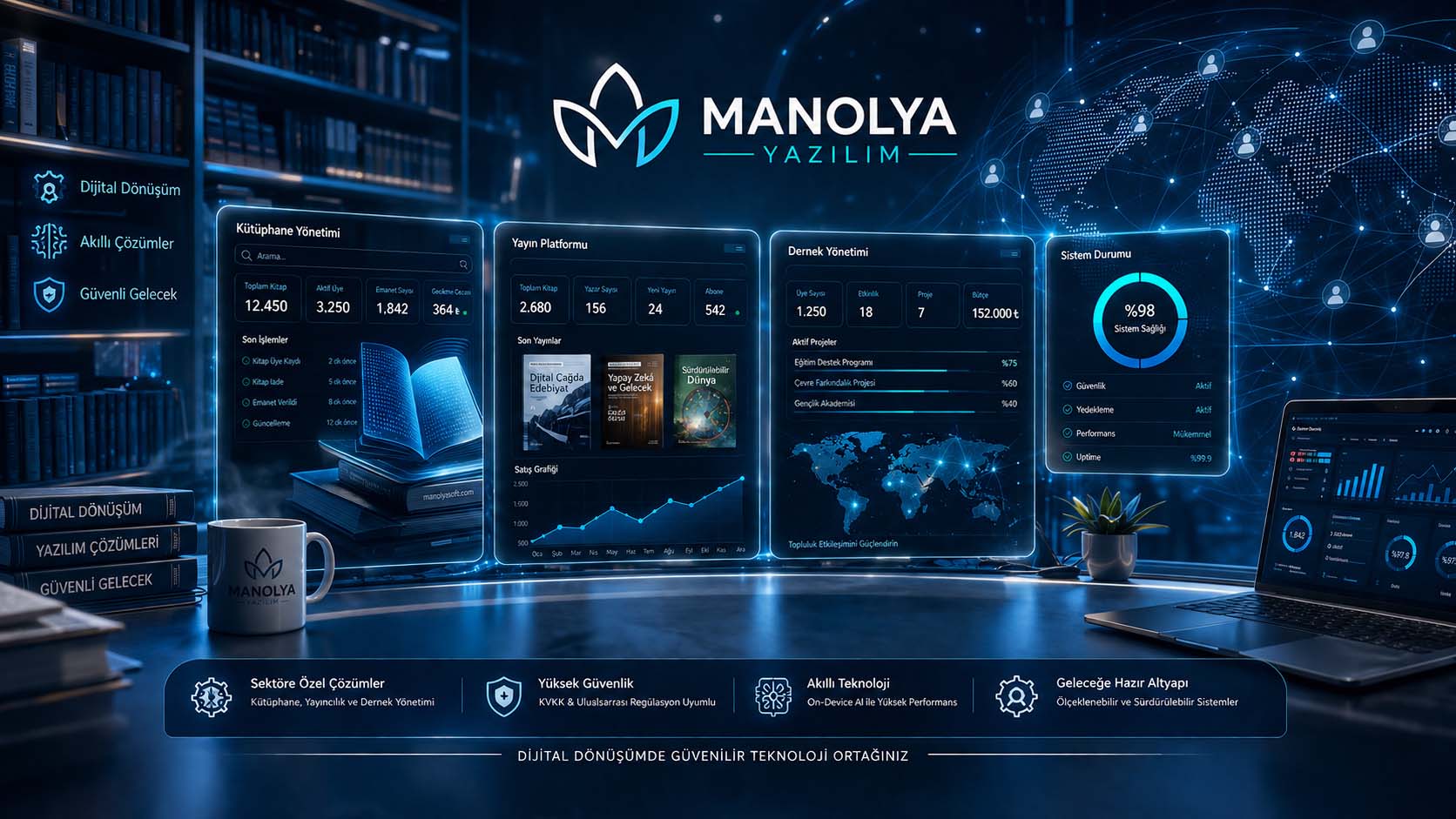
Digital transformation is not simply about having a website; it is about making organizational processes more efficient, secure, measurable, and manageable. Libraries, publishers, and nonprofit organizations can use enterprise software and industry-specific automation systems to manage their operations through centralized digital platforms. ManolyaSoft develops library management solutions that support book, member, loan, return, ISBN, barcode, RFID, and OPAC processes. For publishers, its digital publishing platforms bring together book catalog management, author profiles, digital manuscript submission, content management, and publishing workflows. For nonprofit organizations, ManolyaSoft develops association management systems that help manage members, volunteers, events, projects, content, documents, and reporting processes. When off-the-shelf software cannot fully meet an organization’s requirements, custom software development can provide a more flexible and scalable alternative. By combining industry-specific workflows with modern software architecture, organizations can improve operational efficiency, centralize their data, simplify repetitive processes, and build a stronger digital infrastructure for sustainable long-term growth and future requirements.
Enterprise Software and Industry-Specific Automation Systems
Modern enterprise software and industry-specific automation solutions help organizations digitize their operations, manage data more efficiently, and improve productivity. ManolyaSoft develops specialized software solutions for libraries, publishers, nonprofit organizations, and institutions that need flexible and scalable digital infrastructure.
Digital transformation is no longer limited to having a corporate website. Organizations increasingly need integrated systems that allow them to manage books, users, members, projects, content, documents, and daily operations from a centralized platform.
While off-the-shelf software can meet standard requirements, it may not always address the specific workflows of every organization. This is where custom software development, enterprise software solutions, and industry-specific automation systems can provide greater flexibility.
ManolyaSoft develops sector-focused software platforms designed around the operational requirements of different organizations.
What Is Enterprise Software?
Enterprise software is a type of software designed to help organizations manage their business processes, data, users, operations, and internal workflows through a centralized digital system.
The requirements of enterprise software vary depending on the organization. A library may need book cataloging and circulation management, while a publishing company may require book catalogs, author management, and digital publishing tools.
For this reason, analyzing an organization's existing workflows before developing or implementing a software solution is essential.
Why Are Industry-Specific Automation Systems Important?
Every industry has different workflows, terminology, operational requirements, and data structures. A software platform designed specifically for a particular industry can therefore provide a more practical solution than a generic system.
Industry-specific automation systems can help organizations:
-
Reduce repetitive manual tasks
-
Centralize operational data
-
Improve workflow management
-
Simplify reporting
-
Manage users and permissions
-
Improve information accessibility
-
Automate repetitive processes
-
Create scalable digital workflows
ManolyaSoft develops modular software solutions that can be adapted to the specific needs of different organizations.
Library Management System
Libraries manage large amounts of information every day, including books, members, loans, returns, overdue items, and catalog records.
The Manolya Library Management System is designed to help school, university, public, and private libraries manage their daily library operations digitally.
Key Features of the Library Management System
ISBN Integration
ISBN integration can simplify the cataloging process by allowing book information to be retrieved and added to the system more efficiently.
This reduces manual data entry and helps libraries maintain more consistent catalog records.
Book Loan and Return Management
The system enables libraries to track book loans and returns digitally.
Librarians can monitor which books are currently borrowed, who has borrowed them, and whether items have been returned.
Automated Overdue Calculation
The system can automatically calculate overdue periods according to rules defined by the library.
This helps reduce manual calculations and simplifies the management of overdue books.
Barcode and RFID Compatibility
The Manolya Library Management System can work with existing library barcode systems as well as modern RFID library automation technologies.
This allows organizations to continue using their existing hardware infrastructure while improving their software capabilities.
OPAC Online Catalog
OPAC, or Online Public Access Catalog, allows library users to search the library's collection through an online catalog interface.
Users can search for books and other resources using information such as title, author, or catalog details.
Publisher Software and Digital Publishing Platform
Digital transformation in publishing is no longer limited to having a website. Publishers need effective systems for managing books, authors, content, catalogs, and digital publishing workflows.
The Manolya Publishing Group Digital Platform is designed to provide publishers with a centralized digital infrastructure for managing their publishing operations.
Book Catalog Management
Publishers can organize books by categories, authors, publication dates, and other relevant information.
SEO-friendly book pages can also help publishers create structured content that is easier for search engines and readers to understand.
Author and Book Management
Author biographies, book lists, and related publications can be managed through a centralized administration panel.
This creates a more organized digital publishing environment and allows readers to easily navigate between authors and their works.
Digital Manuscript Submission
A digital manuscript submission module can allow authors to submit their works online while enabling editorial teams to manage and monitor the review process.
This can help publishers move away from fragmented workflows based on email attachments and different file-sharing platforms.
Digital Newsletter and Content Management
Publishers can manage announcements, new releases, author news, campaigns, and other editorial content through a centralized content management system.
OYKÜDER Nonprofit Management Portal
Nonprofit organizations and associations need reliable digital infrastructure to manage members, volunteers, projects, events, content, and organizational communication.
ManolyaSoft developed the OYKÜDER Corporate Association Portal to support the organization's digital communication and content management processes through a centralized platform.
Nonprofit Management System Features
Depending on the organization's requirements, a nonprofit management system can include:
-
Member management
-
Volunteer management
-
News and announcements
-
Event management
-
Project tracking
-
Content management
-
User permissions
-
Reporting
-
Document management
A modular architecture also allows the platform to be expanded as the organization's requirements evolve.
Custom Software vs. Off-the-Shelf Software
One of the most important decisions during digital transformation is whether to use an off-the-shelf software product or invest in a custom software solution.
Off-the-Shelf Software
Off-the-shelf software is designed to address common business requirements and can often be deployed quickly.
However, organizations may require additional customization when their workflows differ significantly from the standard features provided by the software.
Custom Software
Custom software is developed around the specific requirements and workflows of an organization.
This approach can be particularly useful when multiple systems, departments, users, or operational processes need to work together within a single platform.
Industry-Specific Automation
Industry-specific automation combines the advantages of specialized workflows with a scalable software architecture.
Library management systems, publisher software, and nonprofit management platforms are examples of industry-focused digital solutions.
How Does the Enterprise Software Development Process Work?
A successful software project involves more than simply writing code. Understanding the organization's requirements and workflows is one of the most important stages of the process.
A typical enterprise software development process includes:
-
Requirements Analysis: Existing workflows, challenges, and business requirements are identified.
-
System Planning: Required modules, user roles, integrations, and technical architecture are planned.
-
UX and Interface Design: The user experience and interface structure are designed.
-
Software Development: The required modules and integrations are developed.
-
Testing: The system is tested using different functional and user scenarios.
-
Deployment: The software is made available to the organization.
-
Maintenance and Development: The system can be continuously improved according to changing requirements.
The Role of Enterprise Software in Digital Transformation
Digital transformation is not simply about moving existing processes from paper to computers. The real goal is to make organizational processes more efficient, measurable, manageable, and scalable.
For libraries, a library management system can simplify catalog and circulation processes. For publishers, publisher software can centralize book and author management. For nonprofit organizations, a nonprofit management system can improve member, project, and event management.
A well-designed enterprise software platform can help organizations:
-
Simplify operational processes
-
Centralize organizational data
-
Reduce repetitive tasks
-
Improve reporting
-
Enhance user experience
-
Increase operational visibility
-
Adapt to future requirements
ManolyaSoft Enterprise Software Solutions
ManolyaSoft develops enterprise software, custom software solutions, and industry-specific automation systems designed around the operational requirements of organizations.
From library management systems and digital publishing platforms to nonprofit management portals and custom software projects, ManolyaSoft focuses on creating scalable digital solutions for organizations undergoing digital transformation.
If your organization needs to digitize its workflows or build a software platform around its specific operational requirements, the first step is to analyze your existing processes and identify the right digital architecture.
Frequently Asked Questions
What is enterprise software?
Enterprise software is designed to help organizations manage their operations, data, users, workflows, and business processes through a centralized digital platform.
What does a library management system do?
A library management system helps manage books, members, loans, returns, overdue items, catalogs, and other library operations through a centralized software platform.
What is publisher software?
Publisher software is a digital platform designed to help publishing companies manage books, authors, catalogs, content, and publishing workflows.
What is a nonprofit management system?
A nonprofit management system helps associations and nonprofit organizations manage members, volunteers, projects, events, content, documents, and organizational processes.
What is the difference between custom software and off-the-shelf software?
Off-the-shelf software is designed for general requirements, while custom software is developed around the specific workflows and requirements of an organization.
What are industry-specific automation systems?
Industry-specific automation systems are software platforms designed around the workflows and operational requirements of a particular industry or sector.
Conclusion
Enterprise digital transformation is a long-term process that involves improving not only an organization's technology infrastructure but also the way its processes are managed.
Industry-specific automation systems can help libraries, publishers, nonprofit organizations, and other institutions manage their operations more efficiently, centralize their data, and improve their digital workflows.
ManolyaSoft develops enterprise software and industry-specific automation solutions designed to support organizations in their digital transformation journey.